Guide
Male Poses: How Men Should Pose for Photos
Poses for men that read as relaxed instead of stiff: stance and shoulders, hands and jaw, the lean, props like jackets and bikes, and looking away.
Most male poses fail the same way: arms clamped to the sides, chin pulled in, a smile held two seconds too long. The fix is a short list of habits that trade stiff for settled. These rules build poses that read as a man standing comfortably, not a man being photographed.
Stance: wider base, weight on one leg
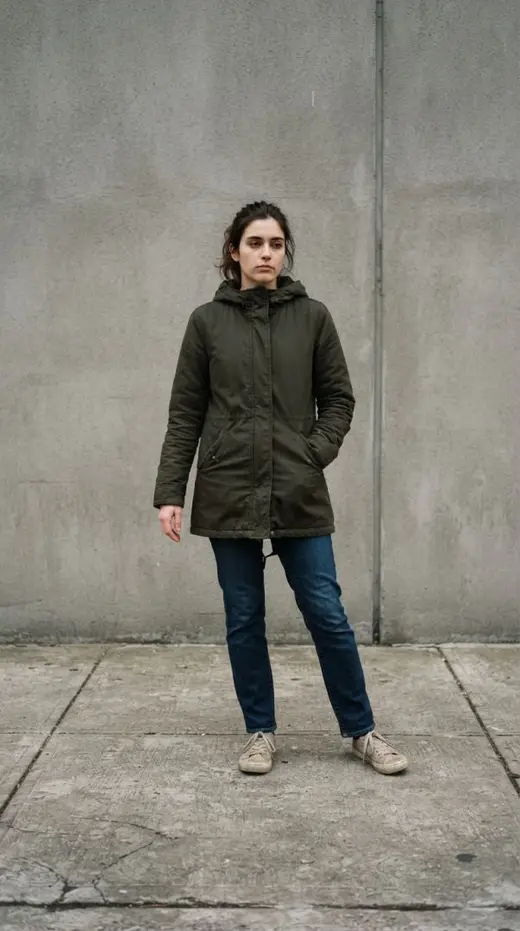
Men can face the camera more squarely than the classic three-quarter turn, but the weight rule still applies. Set your feet about shoulder width apart and push your weight onto one leg, letting the other knee soften. Square shoulders plus even weight reads as a lineup photo; square shoulders plus one loaded leg reads as calm. Keep the spine tall without puffing the chest.
Hands: give them one job each
Hands hanging empty are what make men fidget. Standard fixes, in order of reliability: one hand in a front pocket with the thumb hooked outside, one hand adjusting a watch or cuff, one hand holding a coffee or a jacket slung over the shoulder. Use different jobs for each hand. Two hands in two pockets flattens the pose; one in, one occupied keeps it alive.
Jawline: chin out, then down
The single biggest upgrade for male portraits costs nothing. Push your chin slightly toward the lens, then tip it down a touch. It feels wrong and looks right: the jaw separates from the neck and the face gains structure. Pair it with a relaxed mouth. A closed, loose mouth beats a held smile in most male poses; save the real smile for the frame after someone says something funny.
The lean: instant credibility
Leaning is the most reliable male pose there is. Shoulder against a wall, body angled to the camera, ankles crossed or one foot flat against the wall. The surface does the posing for you: the lean creates angles at the shoulder, hip, and knee without any direction. Trains, doorframes, railings, and counters all work the same way.
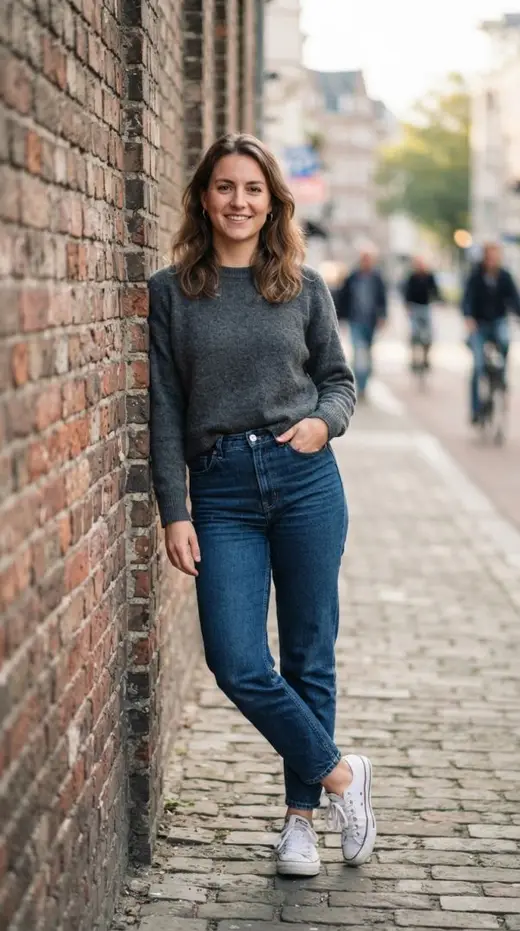
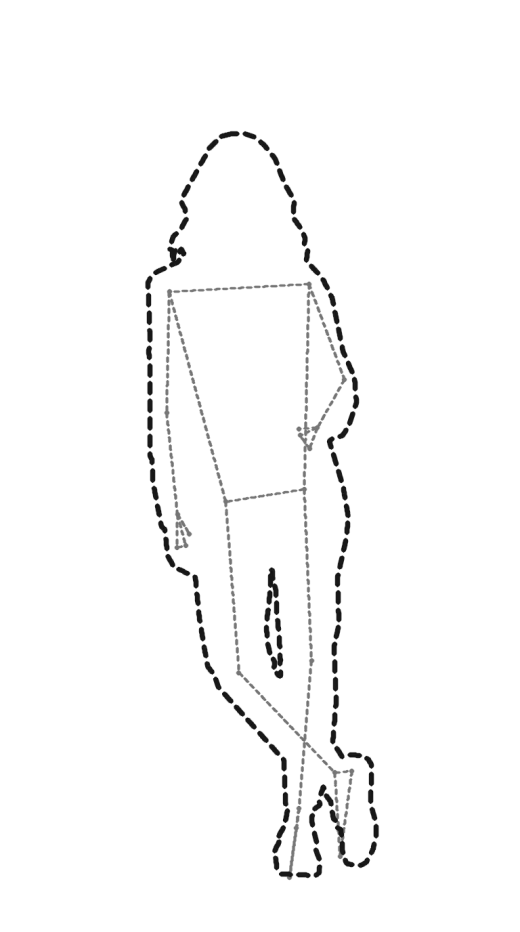
Look away more than you look at the lens
Direct eye contact with a camera is a skill, and until it feels easy, skip it. Look down the street, at your hands, past the photographer's shoulder. The gaze gives the photo a subject beyond your face and gives you something honest to do. Come back to the lens for one or two frames at the end, once the shoot has warmed up.
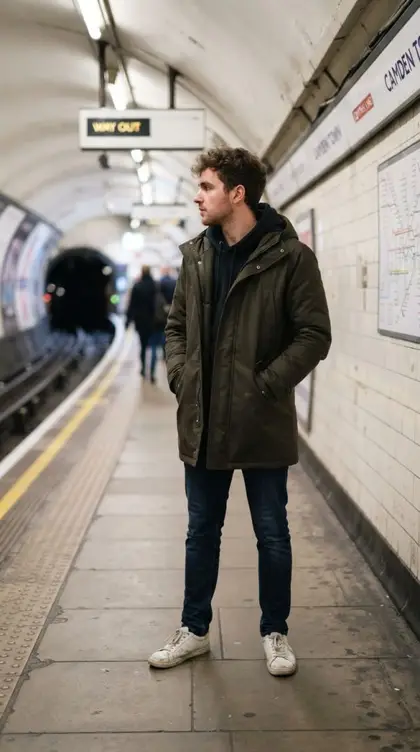
Props carry the pose
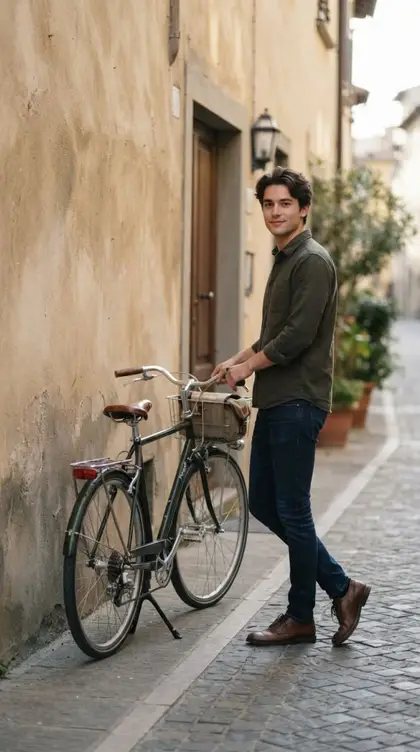
A jacket held over the shoulder, a bike, a coffee, a bag with a cross-body strap: props answer the hands question and the story question at once. Pick one that belongs to the setting. A takeaway cup on a cafe street looks natural; the same cup in a park at sunset looks staged. One prop is enough.