Guide
Golden Hour Photography: Timing, Direction, and Poses
How to actually use golden hour: when it starts, front light versus backlight versus rim light, exposure for glow, and poses that suit warm low sun.
Golden hour is the one lighting upgrade that costs nothing and works on any camera. The sun sits low, the light travels through more atmosphere, and everything it touches turns warm, soft, and directional. The catch: it is shorter than people think, and most of what makes it work is knowing where to stand. Here is the full recipe.
When golden hour actually happens
Roughly the first hour after sunrise and the last hour before sunset. "Roughly" matters: near the equator it can be 40 minutes, in northern summers it stretches past an hour. Do not guess. Any golden hour calculator app or a plain weather app with sunset times tells you the window for your exact location. Plan to arrive 20 minutes early, because the best ten minutes are the last ten, and you want the pose and spot already decided when they arrive.
The three directions
Same sun, three different photos, depending on where you put it.
- Front light (sun behind the photographer): warm, even, and forgiving. Faces glow, eyes catch the light, skin evens out. The one hazard is squinting, so have them close their eyes and open on a count of three.
- Backlight (sun behind the subject): the halo look. Hair lights up, the background melts into glow, and the face falls into soft shade. This is the direction most golden hour photos you save are shot in.
- Side light (sun at 90 degrees): shape and drama. One side of the face warms, the other shades, and every texture shows. Best for structured, still poses rather than movement.
Exposure: decide who wins, face or glow
Golden hour scenes have more contrast than your screen suggests. In front light, tap the face and you are done. In backlight, the camera will try to rescue the bright sky and sink your subject into a murky middle: tap the face to brighten it if you want detail, or drag the exposure slider down if you want the rim-lit, near silhouette look. Either choice works. Letting the camera decide is the only losing move.
Poses that suit the light
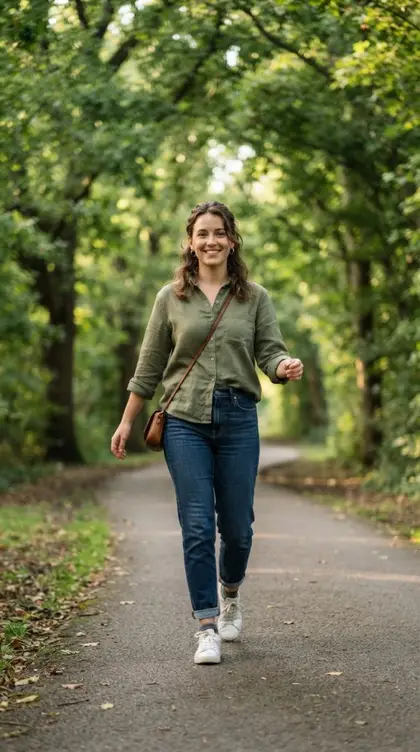
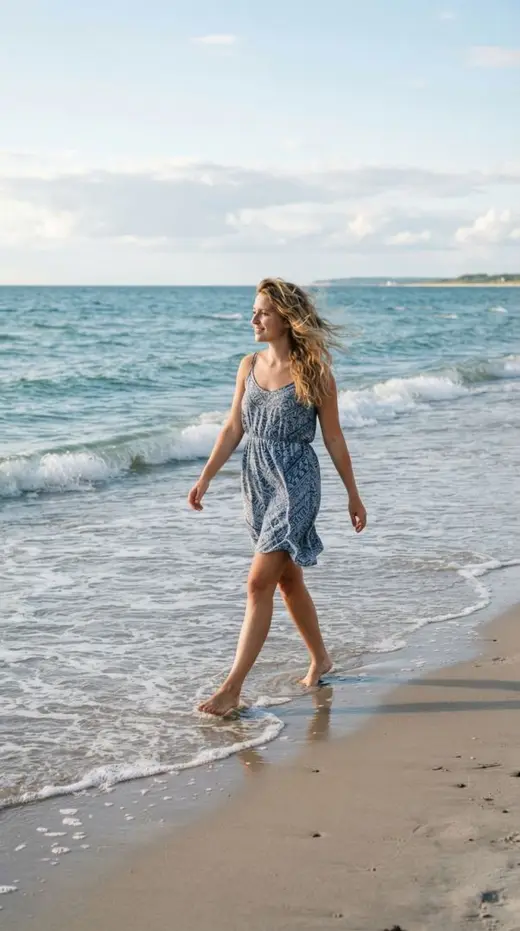
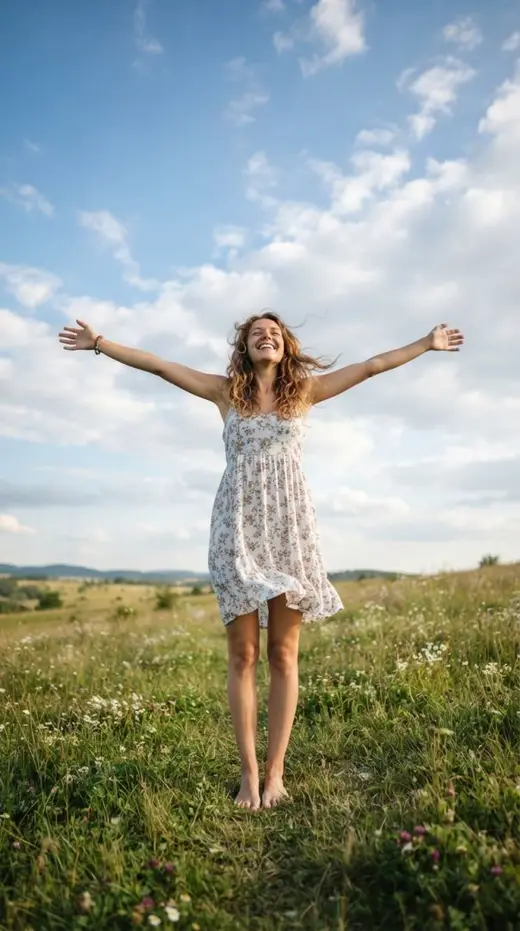
Warm low sun flatters open, unhurried poses. Walking toward the light, sitting on steps or a wall with the sun raking across, open arms in a field, a slow turn with the hair catching backlight. Movement works because golden hour softens everything it touches, and stiff formal poses fight that mood.


Do not pack up at sunset
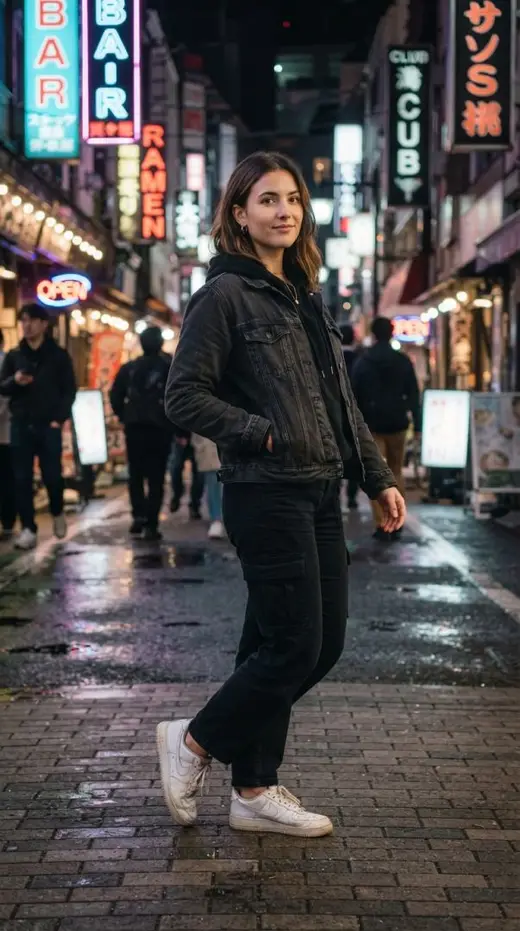
The ten minutes after the sun drops are blue hour's opening act: the sky turns into a giant soft box, shadows disappear, and skin tones go clean and cool. City lights start reading against the sky. If golden hour is the warm photo, this window is the calm one, and it is over fast, so keep shooting until the light is actually gone.