Guide
Window Light Photography: The Free Home Studio
One window is a complete portrait setup: subject placement by angle, distance and falloff, sheer curtains as diffusion, and seated window poses.
Studio softboxes exist to imitate one thing: a big window with indirect light coming through it. You already own the original. One window, one chair, and ten minutes of placement practice cover most of what a home portrait needs. Here is how to work the window.
Why window light flatters
Small light sources make hard shadows; big ones wrap light around a face. A window is enormous relative to a face, so its light is soft by default: gentle shadow edges, even skin, no squinting. The only window to avoid is one with direct sun blasting through it, which turns your soft source back into a spotlight. Wait for the sun to move off, or use the curtain trick below.
Placement: the angle sets the mood
Keep the subject a meter or so from the glass and rotate them around that spot.
- Facing the window: flat, even light. Kind to skin, low on drama. Good for clean headshots.
- 45 degrees to the window: the default. One cheek bright, the other in soft shade, a little triangle of light under the far eye. This is the angle painters built portraits on.
- Side-on (90 degrees): half the face lit, half in shadow. Moody and structural. Works best with still, deliberate poses.
Distance controls the drama
Window light falls off fast. A subject one step from the glass is much brighter than the wall three steps behind them, which is why window portraits get those dark, clean backgrounds for free. Want a brighter background? Move the subject back and let the light even out. Want more contrast between face and room? Move them closer to the glass. One step is a full mood change, so walk the subject through the range before you settle.
Sheer curtains are free diffusion
Direct sun through the window is the one condition that breaks the setup. A sheer white curtain fixes it: the sun hits the fabric, the fabric becomes the light source, and you get an even bigger, softer glow. Photographers pay real money for scrims that do exactly what your net curtain does.
Turn the other lights off
Ceiling bulbs are orange, window light is blue-white, and a face lit by both ends up two colors at once, which no filter fully repairs. Before shooting, kill every artificial light in the room. If the room gets dim, raise the exposure or move closer to the window rather than flicking the switch back on.
Seated poses fit windows
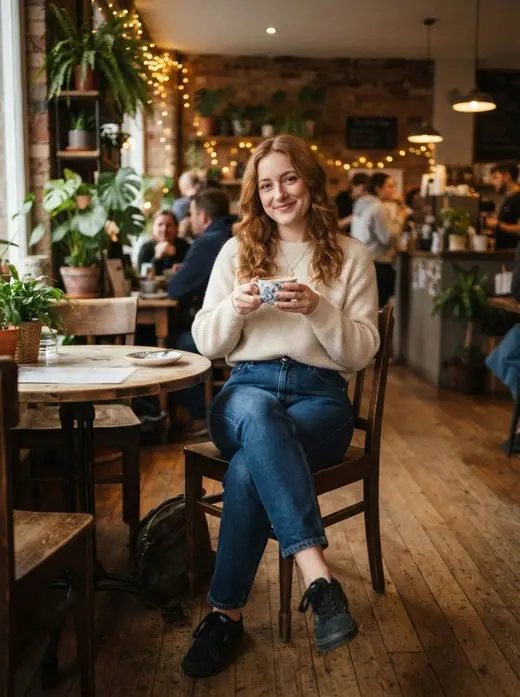
Windows come with sills, chairs, and tables, so use them. Seat the subject at 45 degrees with a table to rest the arms, give the hands a cup, and have them look out the glass rather than at the camera. The gaze toward the light lifts the face into it and gives the photo an honest reason for the expression.

One last scouting tip: a north-facing window (south-facing below the equator) never gets direct sun, so it serves soft, usable light all day. If you have one, that is your studio corner.