Guide
Low Light Photography on a Phone: Night Portraits
Sharp portraits after dark: night mode habits, finding city light sources, holding still, neon and shop windows, and poses that survive slow shutters.
Phones have gotten shockingly good in the dark, but only if you work with them. Night mode is doing something specific under the hood, and once you know what, the rest of low light photography turns into a short list of habits: find light, hold still, and pose like the shutter is slow. Because it is.
Night mode is a long exposure. Act like it.
When your phone shows a 2s or 3s badge, it is capturing for that many seconds and stacking the frames into one photo. Anything that moves during those seconds smears. That means two people have to hold still: the one holding the phone and the one in front of it. Say it out loud before the shot ("hold for three") and count through the capture. Most ruined night photos die in the last half second, when someone assumes the photo is done and relaxes.
Find the light source before you find the pose
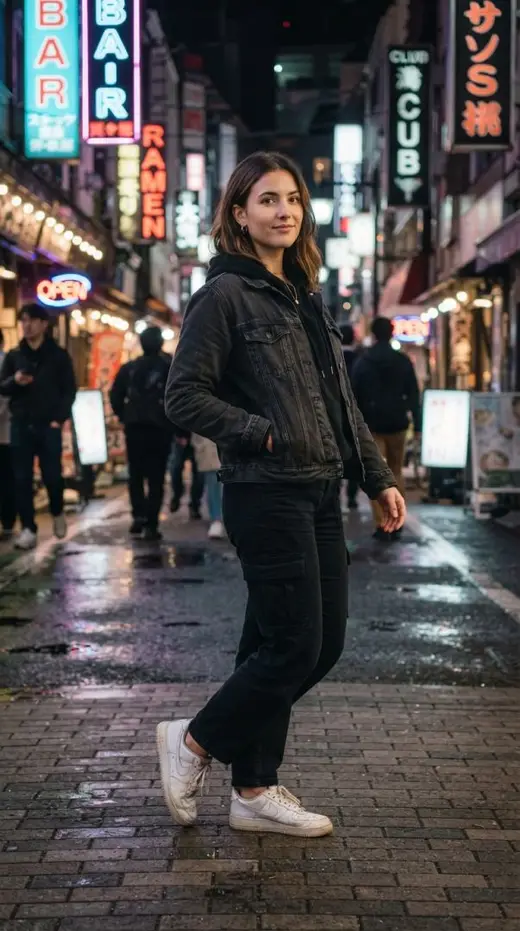
In daylight you pick a background. At night you pick a light. Shop windows throw broad, even light like a softbox. Neon signs add color and mood. Street lamps give a hard spotlight. Even another phone screen works as a fill light for a face at arm's length. Walk toward whatever is bright, then build the photo around it.

Near the light, not under it
Standing directly under a street lamp or awning light drops the light straight down, which shadows the eye sockets and reads as harsh. Step one or two paces to the side so the light arrives at an angle, or turn to face the source so it lands on the face. If the eyes are dark pits, you are under the light; slide sideways until they catch it.
Pose for a slow shutter
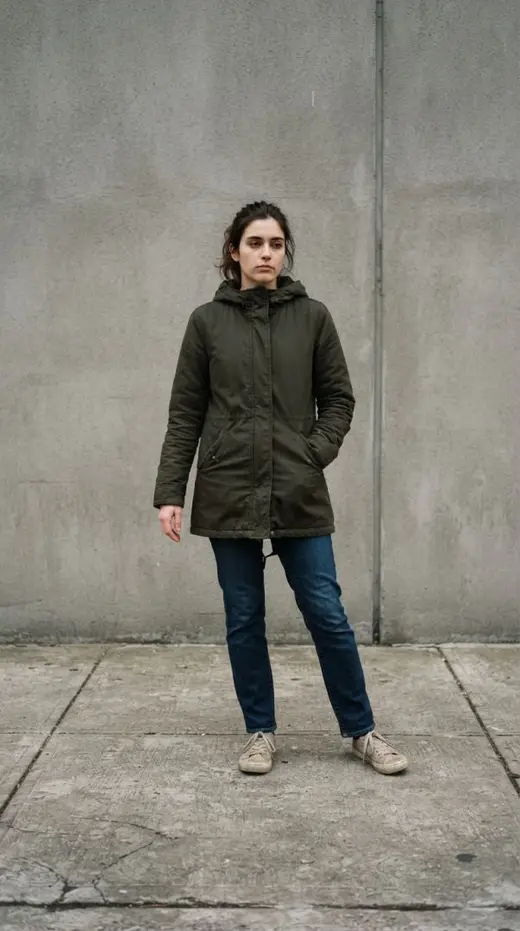
Jumps, hair tosses, and mid-stride walks belong to daylight. At night the winning poses are the still ones: a lean against a wall, hands in pockets, seated on steps, an over-the-shoulder look that pauses at the end of the turn. Give the pose a support (wall, railing, table) and it stays sharp through a multi-second capture without feeling stiff.

Brace the phone
The photographer blurs more night shots than the subject does. Tuck your elbows into your ribs, hold the phone with both hands, and breathe out before you tap. Better: lean your shoulder against a wall or set the phone on a ledge, a bin, a railing, anything solid. Tap the shutter gently or use the volume button; jabbing the screen shakes the whole frame.
Do not zoom, and make peace with grain
Digital zoom crops away the pixels night mode worked so hard to gather, so a 3x night shot from the same spot is dramatically worse than walking closer at 1x. Use your feet. And accept some grain: a slightly grainy photo with good light direction beats a smeared clean one every time. Grain reads as film; blur reads as a mistake.