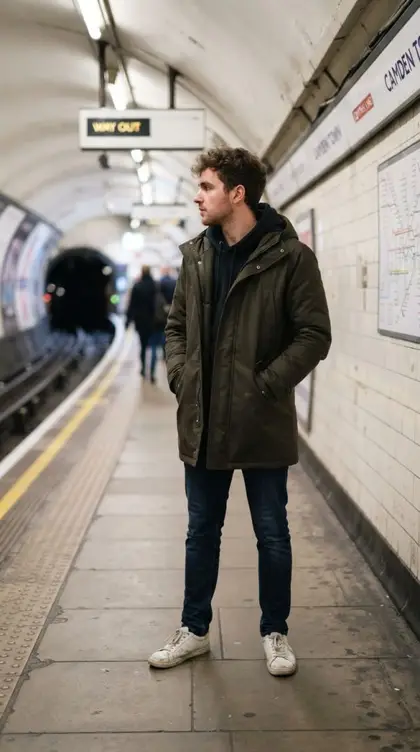
Guide
Sitting Poses: How to Sit for Photos
Sitting for photos without slouching or squashing: edge-of-seat posture, leg lines, steps and floor variations, and where the camera should be.
Sitting should be the easy pose, and somehow it is where photos go wrong fastest: slouched backs, squashed legs, and chairs swallowing half the body. The fixes are mechanical and they work on any seat, from a cafe chair to a curb. Here is how to sit for photos, rule by rule.
Sit on the edge, not the back
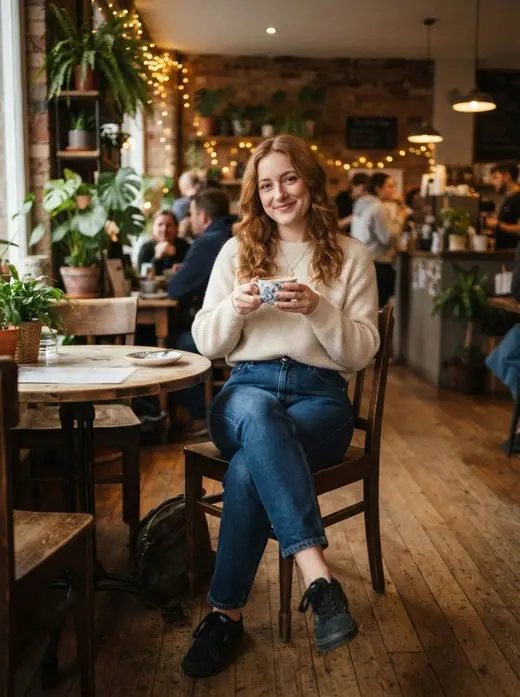
The single biggest upgrade: slide forward to the front third of the seat. Sitting back compresses your thighs against the chair, rounds the spine, and shortens your whole body. Perching on the edge forces a straighter back, drops the thighs so they keep their shape, and leaves daylight between you and the chair. Nobody in a photo you have ever saved was sitting all the way back.
Build the leg line
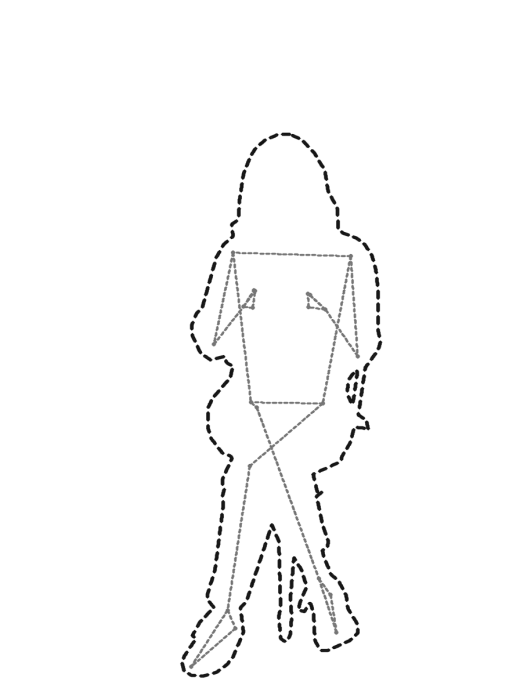
Legs carry a seated pose. Pick one arrangement and commit: ankles crossed and extended, one knee up with the other leg tucked, or both knees angled to the same side. The one rule underneath all of them is asymmetry. Two feet planted flat and parallel read as a waiting room. Point toes when legs are extended, and angle knees toward or away from the camera rather than straight at it.
The elbow-on-knee lean
Leaning slightly forward with a forearm or elbow resting on a knee is the most reliable seated pose there is. It brings your face closer to the lens, creates a triangle with the arm, and gives both hands a home. Keep the lean in the hips, not the shoulders, so the back stays long instead of hunched.
Steps and stairs beat chairs
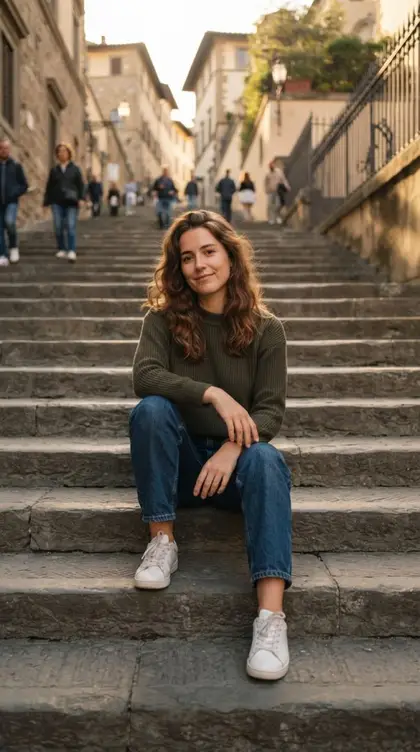
Stairs are the best seat in photography because every step is a shelf. Sit on one step, plant your feet two steps down, and the knees land at a flattering height automatically. Steps also stagger body parts into layers, which adds depth a flat chair cannot. Curbs, ledges, and low walls work the same way.
Floor sitting
On the floor, avoid the symmetric cross-legged sit unless you are going for it deliberately. Better options: legs to one side with a hand planted behind you, one knee up with an arm draped over it, or lying on your side propped on a forearm. The planted hand matters, because it tips the shoulders off level, and level shoulders are what make floor photos look posed.
Put the camera at the subject's eye level
Most seated photos fail before the pose does, because the photographer stays standing and shoots down. A high angle on a seated person shortens the legs and shrinks the body. The person with the camera should crouch until the lens is level with the seated subject's eyes, or even a touch below. At a table, that means shooting from seated height across it.