Guide
What to Do With Your Hands in Photos
The complete answer to the most asked posing question: pockets, props, touch points, and the hand positions that always photograph well.
Ask anyone what feels worst about being photographed and the answer is the same: "I don't know what to do with my hands." The moment a camera appears, hands turn into two objects you suddenly have to manage. Here is the full menu of options, from easiest to most deliberate, so you always have somewhere to put them.
Why hands feel wrong in photos
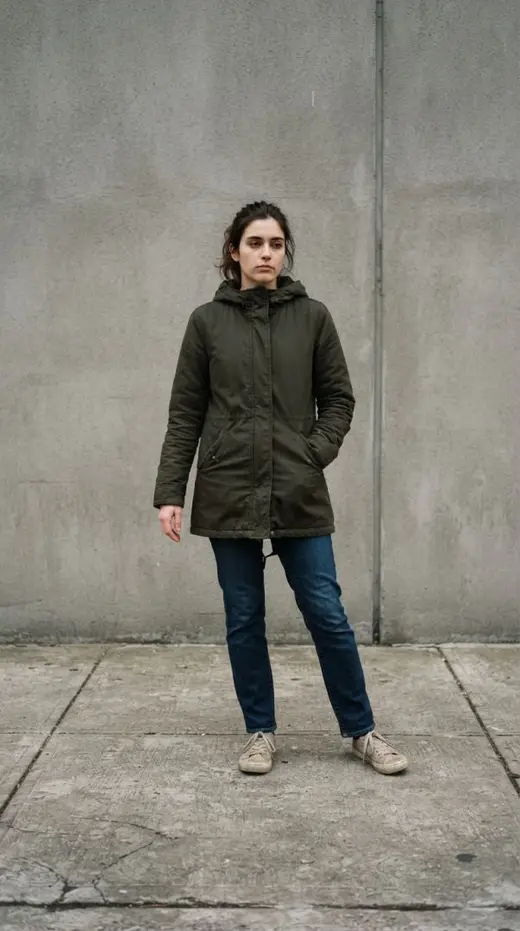
Hands hanging flat at your sides are dead weight. They flatten your posture, pin your arms to your torso, and make the whole pose read as "waiting in line". The fix is never to think harder about the hands themselves. Give them a task and they sort themselves out, the same way they do in real life, where you never think about them at all.
The pocket family
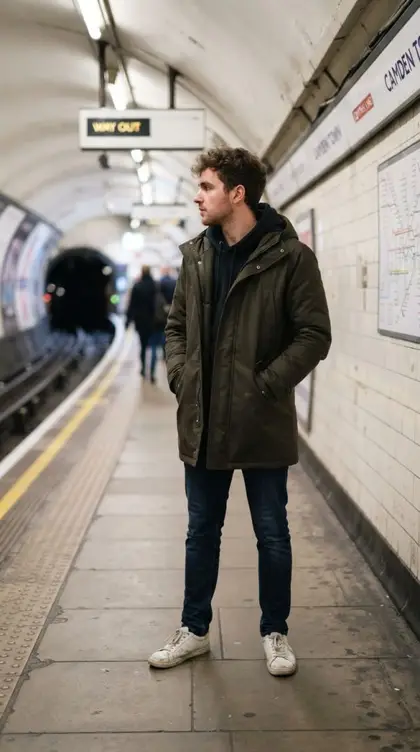
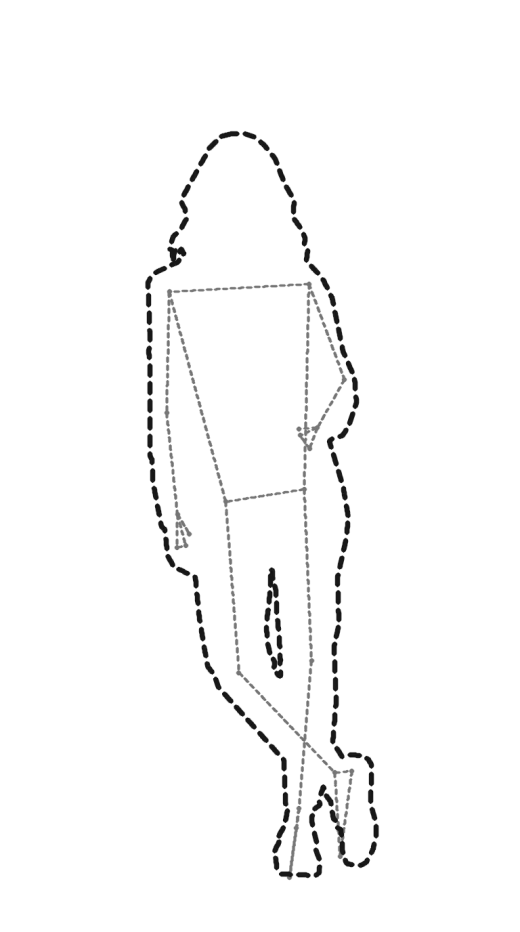
Pockets are the fastest fix. The rule: never bury the whole hand. Hook the thumb outside with fingers in, or tuck fingers in and leave the thumb out. The half-tuck keeps the wrist visible and bends the elbow, which opens a gap between arm and body and instantly slims the silhouette. Back pockets do the same job and pull the shoulders back a touch. One hand in, one hand free beats both hands hidden.
Give them an object
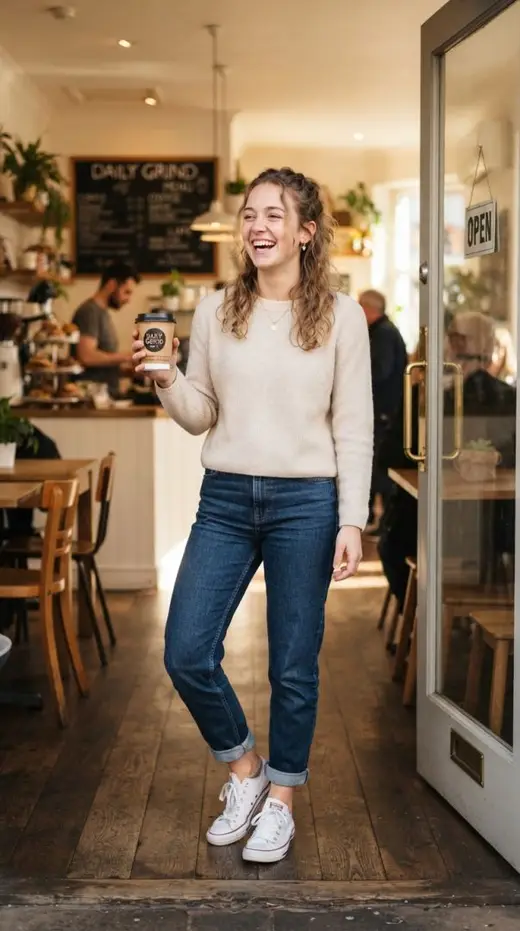
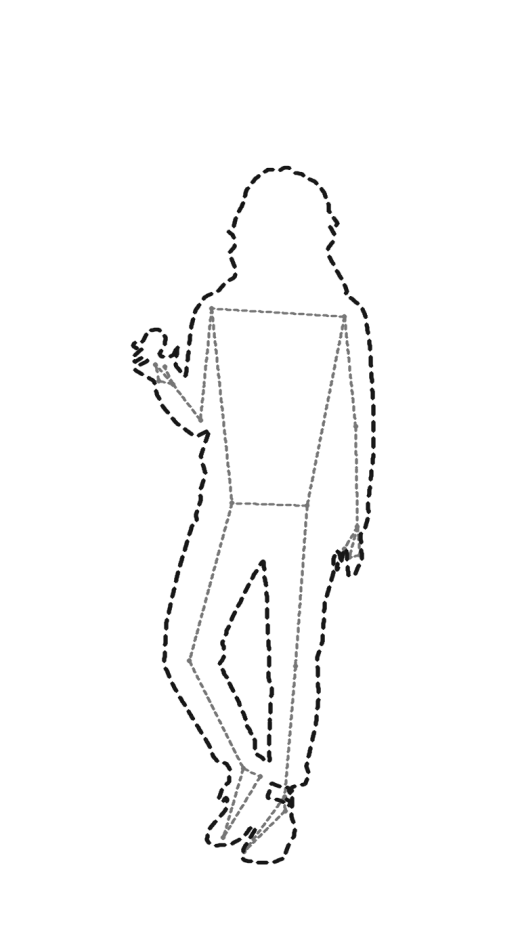
A held object beats an empty hand every time. Coffee cup, phone, bag strap, sunglasses, jacket slung over a shoulder. The object bends the elbow, raises the hand into the frame, and gives your eyes a natural place to look. This is why "candid with coffee" is an entire genre: the cup is doing the posing.
Touch points on yourself
No props available? Your own body and clothes are the prop. Fix your hair, adjust a cuff or watch, touch your collarbone, straighten a collar, rest a hand on the opposite forearm. These read as caught moments because they are things people actually do. Keep the touch light: graze, don't grab. A soft half-closed hand photographs better than fingers pressed flat.
Touch the environment
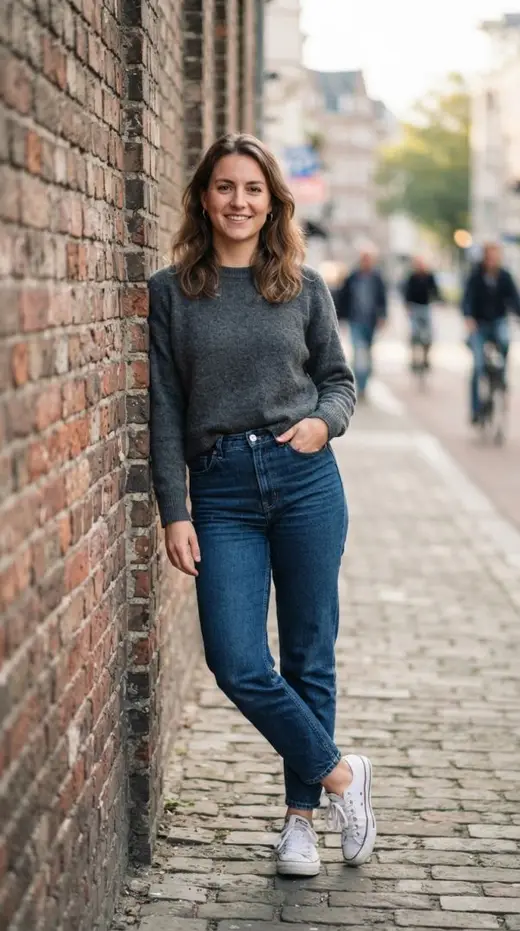
Walls, railings, door frames, chair backs, and tables all accept a hand. Resting a hand on something anchors the pose and explains the body's angle. This pairs with the lean: shoulder against the wall, near hand in a pocket, far hand relaxed. Two touch points, zero thinking.
What to avoid
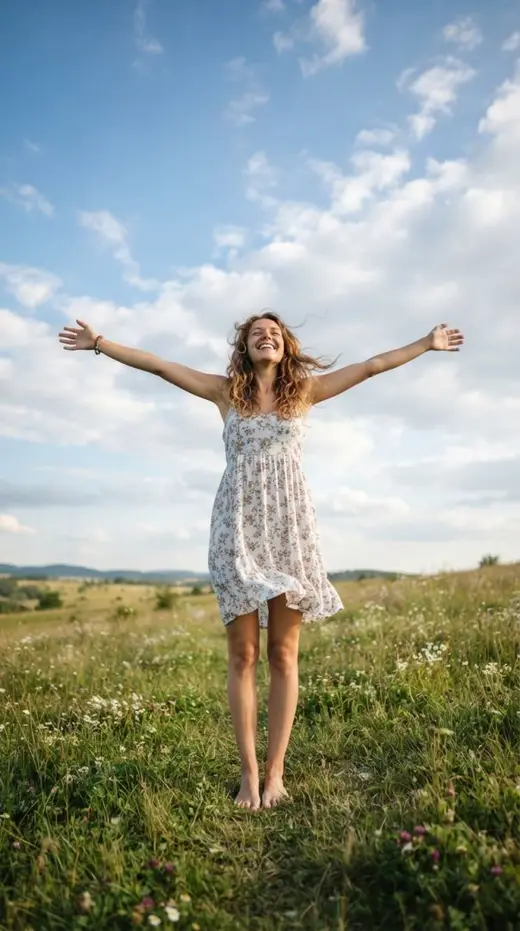
Three habits ruin otherwise good poses. Flat palms pressed against your thighs, which read as military attention. Tight fists, which read as tension even when you feel fine. And spread-wide fingers hovering in the air, which pull attention from your face. When in doubt, curl the fingers softly, as if holding an egg, and point knuckles rather than palms at the lens.